We have compiled a list of manufacturers, distributors, product information, reference prices, and rankings for Elemental Analysis Equipment.
ipros is IPROS GMS IPROS One of the largest technical database sites in Japan that collects information on.

Elemental Analysis Equipment Product List and Ranking from 7 Manufacturers, Suppliers and Companies | IPROS GMS

Last Updated: Aggregation Period:Jul 15, 2026~Aug 11, 2026
This ranking is based on the number of page views on our site.

Elemental Analysis Equipment Manufacturer, Suppliers and Company Rankings

Last Updated: Aggregation Period:Jul 15, 2026~Aug 11, 2026
This ranking is based on the number of page views on our site.

  1. 一般財団法人材料科学技術振興財団 MST Tokyo//Testing, Analysis and Measurement
  2. アイテス Shiga//Electronic Components and Semiconductors
  3. FOSS JAPAN Co., Ltd. Tokyo//Testing, Analysis and Measurement
  4. 4 Kyoritsu Electric Corporation Shizuoka//Industrial Electrical Equipment
  5. 5 LECOジャパン Tokyo//Testing, Analysis and Measurement

Elemental Analysis Equipment Product ranking

Last Updated: Aggregation Period:Jul 15, 2026~Aug 11, 2026
This ranking is based on the number of page views on our site.

  1. Examples of cross-sectional observation of wire bonding with various compositions. アイテス
  2. Elemental analysis device "Micral" FOSS JAPAN Co., Ltd.
  3. [Analysis Case] Evaluation of Two-Dimensional Electron Gas Layer in Normally Off GaN HEMT 一般財団法人材料科学技術振興財団 MST
  4. 4 MST [Chitose Sales Office] OPEN! 一般財団法人材料科学技術振興財団 MST
  5. 5 [Analysis Case] Wide-Area Cross-Section Observation of Bumps 一般財団法人材料科学技術振興財団 MST

Elemental Analysis Equipment Product List

1~30 item / All 55 items

Displayed results

Hydrogen, Carbon, and Nitrogen Simultaneous Quantification Device Microcoder JM11

Manufacturer Jay Science Lab has started selling a new organic trace element analysis device.

- Equipped with a maintenance-friendly openable electric furnace - Horizontal combustion tube that enables ash recovery - Sensitivity settings available for each element - Device control and data processing are managed collectively on a PC - Installation area reduced by 30% compared to conventional models

  • Other physicochemical equipment
  • Testing Equipment and Devices
  • Elemental Analysis Equipment

Added to bookmarks

Bookmarks list

Bookmark has been removed

Bookmarks list

You can't add any more bookmarks

By registering as a member, you can increase the number of bookmarks you can save and organize them with labels.

Free membership registration

Oxygen and nitrogen analysis in Ti, Zr, W, Mo, Ta, Nb, Hf alloys

Report on the analysis of oxygen and nitrogen in Ti, Zr, W, Mo, Ta, Nb, Hf alloys.

At LECO Japan, we will pick up samples that are expected to enhance the accuracy, efficiency, and safety of your analysis operations using LECO's analytical instruments, and provide them as a special report. Please take a look. If you would like to know whether similar samples can be applied, please feel free to contact us.

  • Other measurement, recording and measuring instruments
  • Analytical Equipment and Devices
  • Elemental Analysis Equipment

Added to bookmarks

Bookmarks list

Bookmark has been removed

Bookmarks list

You can't add any more bookmarks

By registering as a member, you can increase the number of bookmarks you can save and organize them with labels.

Free membership registration

Example of analysis of compounds at the SAC solder and Ni pad interface.

It is also possible to display various maps of each phase! Analysis is based on the information of the crystal structure possessed by the sample.

We will introduce an example of the analysis of compounds formed at the interface between Sn-Ag-Cu solder and NiP pads. At the interface between NiP pads and Sn-Ag-Cu solder, compounds such as (Ni,Cu)3Sn4 and (Cu,Ni)6Sn5 grow, and surface analysis using EDX shows the distribution of Ni, Cu, and Sn within these compounds. The EBSD method is an analytical technique based on the crystallographic information of the sample. By combining it with elemental analysis using EDX, it is possible to estimate the composition, and in some cases, analysis can be performed using the crystallographic data of Ni3Sn4 and Cu6Sn5 as substitutes. [Summary] < Elemental Analysis by EDX > - Surface analysis shows the distribution of Ni, Cu, and Sn within the compounds. < Crystallographic Orientation Analysis by EBSD > - By combining this with elemental analysis using EDX, it is possible to estimate the composition. - In some cases, analysis can be performed using the crystallographic data of Ni3Sn4 and Cu6Sn5 as substitutes. *For more details, please download the PDF or feel free to contact us.

  • Contract Analysis
  • Elemental Analysis Equipment

Added to bookmarks

Bookmarks list

Bookmark has been removed

Bookmarks list

You can't add any more bookmarks

By registering as a member, you can increase the number of bookmarks you can save and organize them with labels.

Free membership registration

Examples of cross-sectional observation of wire bonding with various compositions.

We propose processing, pretreatment, and observation methods based on accumulated know-how! We will introduce examples of observation and elemental analysis of various wire cross-sections.

We would like to introduce examples of cross-sectional observation and elemental analysis of wire bonding with various compositions conducted by our company. Wire bonding is a technology that connects electrodes on semiconductor chips to package terminals using metal wires, with materials such as gold (Au), aluminum (Al), and copper (Cu) being used for the wires. The samples presented were prepared by mechanical polishing to create cross-sections, but there are appropriate processing methods depending on the observation purpose, sample composition, and structure. Utilizing our accumulated know-how, we will consider and propose processing, pre-treatment, observation methods, and combinations. 【Characteristics of Each Wire】 ■ Gold (Au) Wire: Has high conductivity, is chemically stable, and is less prone to oxidation, making it highly reliable. ■ Aluminum (Al) Wire: Suitable for applications that require high current. ■ Copper (Cu) Wire: Has lower electrical resistance and higher thermal conductivity than gold. ■ Palladium (Pd) Coated Copper (Cu) Wire: Improves oxidation resistance and bonding properties. *For more details, please download the PDF or feel free to contact us.

  • Other metal materials
  • aluminum
  • Elemental Analysis Equipment

Added to bookmarks

Bookmarks list

Bookmark has been removed

Bookmarks list

You can't add any more bookmarks

By registering as a member, you can increase the number of bookmarks you can save and organize them with labels.

Free membership registration

Treatment under non-atmospheric exposure

It is possible to evaluate the sample in its original state.

■Features ? By handling samples under atmospheric non-exposure, it is possible to minimize alteration and changes even for highly reactive samples. ? Cutting, peeling, and surface preparation under atmospheric non-exposure can reduce secondary contamination and oxidation from the atmosphere. ? Methods that can be evaluated under atmospheric non-exposure: SIMS, TOF-SIMS, AES, XPS, SEM, TEM, STEM, Raman, XRD, FIB, etc.

  • 打ち合わせ.jpg
  • セミナー.jpg
  • Contract Analysis
  • Contract measurement
  • Contract Inspection
  • Elemental Analysis Equipment

Added to bookmarks

Bookmarks list

Bookmark has been removed

Bookmarks list

You can't add any more bookmarks

By registering as a member, you can increase the number of bookmarks you can save and organize them with labels.

Free membership registration

[Analysis Case] Elemental Analysis of Active Materials in Lithium-Ion Secondary Batteries

Dismantling and sampling can be performed in a non-exposed atmospheric environment, allowing for measurements that minimize degradation and alteration.

In AES (Auger Electron Spectroscopy), it is possible to perform elemental mapping (surface analysis) at sub-micron levels, allowing for clear confirmation of the elemental distribution in ternary materials (Co, Mn, Ni). Additionally, the distribution of carbon derived from binders and conductive additives can be measured with high sensitivity. In this study, a series of processes for the positive electrode active material were conducted in an atmosphere-free environment (inert gas atmosphere) until the introduction of the equipment, minimizing alterations during measurement. As a result, it was suggested that larger particles are LiCoO2, while smaller particles are LiCoxMnyNizO2 and LiMn2O4, indicating a non-uniform distribution of particles. Measurement methods: AES・SEM Product field: Secondary batteries Analysis purpose: Composition evaluation, identification, composition distribution evaluation For more details, please download the materials or contact us.

  • SEM像.jpg
  • all.jpg
  • Contract Analysis
  • Elemental Analysis Equipment

Added to bookmarks

Bookmarks list

Bookmark has been removed

Bookmarks list

You can't add any more bookmarks

By registering as a member, you can increase the number of bookmarks you can save and organize them with labels.

Free membership registration

[Analysis Case] Comprehensive Evaluation of Organic EL Displays

We evaluate by combining various methods such as structural understanding, material assessment, and identification of deterioration causes.

Organic EL is expected to be a self-emitting, flexible next-generation display and lighting panel, but further improvements in reliability are desired. By combining various methods, comprehensive evaluations such as structural analysis, condition analysis, and identification of degradation causes can be achieved.

  • Contract Analysis
  • Elemental Analysis Equipment

Added to bookmarks

Bookmarks list

Bookmark has been removed

Bookmarks list

You can't add any more bookmarks

By registering as a member, you can increase the number of bookmarks you can save and organize them with labels.

Free membership registration

[Analysis Case] Wide-Area Cross-Section Observation of Bumps

Wide-area observation of micro-specific locations is possible through cross-section preparation using ion polishing.

The Ion Polish (IP) method allows for the production of cross-sections with minimal processing damage (such as delamination at interfaces, step differences due to hardness variations, and scratches from polishing) that were problematic in mechanical polishing methods. The positional accuracy of processing is also improved, enabling the creation of wide-area cross-sections that include small features. Due to the minimal damage to the crystals, clean crystal patterns can be obtained. Additionally, since there is no influence from mechanical stress, detailed evaluation of the cross-sectional structure of specific areas can be conducted through AES analysis, SEM observation, and EDX analysis while faithfully preserving the internal structure.

  • Contract Analysis
  • Elemental Analysis Equipment

Added to bookmarks

Bookmarks list

Bookmark has been removed

Bookmarks list

You can't add any more bookmarks

By registering as a member, you can increase the number of bookmarks you can save and organize them with labels.

Free membership registration

[Analysis Case] Observation of the Cross-Section of Tooth Enamel Prisms

Applying FIB processing technology, the entire interface of enamel/dental adhesive is observed.

In dental caries treatment, adhesives are used to integrate the filling material used to fill the "cavity" with the tooth structure. The adhesive must have a strong bonding strength with the tooth and the ability to withstand acids and heat that may occur in the oral cavity over a long period after treatment. Observing the adhesive interface is an effective means for evaluation and consideration. By using a manufacturing method that employs FIB processing technology, we were able to achieve effective results that could not be obtained with conventional ultra-thin sections made with diamond knives, and we would like to introduce this.

  • Contract Analysis
  • Elemental Analysis Equipment

Added to bookmarks

Bookmarks list

Bookmark has been removed

Bookmarks list

You can't add any more bookmarks

By registering as a member, you can increase the number of bookmarks you can save and organize them with labels.

Free membership registration

[Analysis Case] Composite Analysis of White Powder

Identification of powders by FT-IR analysis and XRF analysis.

When analyzing and identifying unknown samples such as foreign substances, it is effective to analyze the data comprehensively from multiple measurement methods. We will introduce a case where FT-IR analysis, which is a vibrational spectroscopy method, was combined with XRF analysis, an elemental analysis method in the atmosphere, to identify two types of white powders.

  • Contract Analysis
  • Elemental Analysis Equipment

Added to bookmarks

Bookmarks list

Bookmark has been removed

Bookmarks list

You can't add any more bookmarks

By registering as a member, you can increase the number of bookmarks you can save and organize them with labels.

Free membership registration

Analysis case: Composition distribution analysis of CIGS thin films

It is possible to evaluate the composition quantification, in-plane distribution, and depth distribution of thin films.

In the development aimed at enhancing the performance of CIGS thin-film solar cells, the optimization of the film formation process conditions for the light-absorbing layer is necessary, and controlling the compositional distribution of the CIGS composition has become important. This document presents cases where the composition of the deposited CIGS thin film was quantitatively analyzed with high precision using ICP-MS, evaluated for depth concentration distribution using SIMS, and assessed for in-plane concentration distribution on the substrate using XRF. Measurement methods: SIMS, ICP-MS, XRF, etching Product field: Solar cells Analysis objectives: Composition evaluation, identification, compositional distribution assessment, film thickness evaluation, product investigation For more details, please download the materials or contact us.

  • C0236_2.png
  • C0236_3.png
  • Contract Analysis
  • Elemental Analysis Equipment

Added to bookmarks

Bookmarks list

Bookmark has been removed

Bookmarks list

You can't add any more bookmarks

By registering as a member, you can increase the number of bookmarks you can save and organize them with labels.

Free membership registration

[Analysis Case] Evaluation of Surface Metal Contamination in Plastic Containers

Evaluation of the composition and distribution of impurities in polymer materials using XRF.

XRF is an analytical method used to evaluate the composition and distribution of constituent elements. A notable feature is that it does not require any special pretreatment for measurements, and it can be performed non-destructively over a wide range from 1.2 mm to several centimeters. As an example of elemental analysis using XRF, we will introduce a case where measurements were conducted focusing on the metal components contained in polymer materials of chemical storage containers, investigating metal contamination that adhered to the container surface during the storage period.

  • Contract Analysis
  • Elemental Analysis Equipment

Added to bookmarks

Bookmarks list

Bookmark has been removed

Bookmarks list

You can't add any more bookmarks

By registering as a member, you can increase the number of bookmarks you can save and organize them with labels.

Free membership registration

[Analysis Case] Composite Evaluation of Zn-based Buffer Layer Using X-rays

Evaluation of composition, bonding state, structure, and density is possible.

In the pursuit of improving the efficiency of CIGS thin-film solar cells, various buffer layer materials have been investigated for controlling the band structure and crystallinity from the light absorption layer to the transparent electrode. This presents a case study of various evaluations conducted using X-rays on Zn-based buffer layers deposited on a flattened substrate. Comparisons can be made between different levels based on deposition conditions and various processes after deposition.

  • Contract Analysis
  • Elemental Analysis Equipment

Added to bookmarks

Bookmarks list

Bookmark has been removed

Bookmarks list

You can't add any more bookmarks

By registering as a member, you can increase the number of bookmarks you can save and organize them with labels.

Free membership registration

[Analysis Case] Investigation of Alkyl Chain Length Distribution of LAS

Analysis of LAS in powder detergents, liquid detergents, and household wastewater is possible.

Linear alkylbenzene sulfonic acid and its salts (LAS) are considered substances of concern due to their potential impact on living organisms. Therefore, they have been added to the environmental standards related to the conservation of aquatic organisms within the environmental standards concerning the preservation of living environments affected by water pollution, and a standard value has been established (March 27, 2013). Since approximately 90% of the usage of LAS is for household detergents, measurements were conducted on existing household detergents and household wastewater, and a comparison of the distribution of LAS alkyl chain lengths (C10 to C14) was performed.

  • Contract Analysis
  • Elemental Analysis Equipment

Added to bookmarks

Bookmarks list

Bookmark has been removed

Bookmarks list

You can't add any more bookmarks

By registering as a member, you can increase the number of bookmarks you can save and organize them with labels.

Free membership registration

[Analysis Case] Analysis of the Binding State of Li in Lithium-Ion Secondary Batteries

By analyzing the waveform of other elements, it is possible to calculate the existence ratio of Li based on its bonding states.

In lithium-ion secondary batteries, the SEI layer (solid electrolyte interface) is a significant factor affecting the battery's lifespan, and it is important to understand the chemical species of Li contained within it. Li itself has a small chemical shift, making direct evaluation difficult; however, by performing waveform analysis to separate the states of the bonding partner elements (C, O, F, P), it is possible to calculate the presence ratio of Li in different bonding states. An evaluation of the state of Li before and after cycle testing revealed that after the test, the presence ratios of Li2CO3 and Li-POxFy increased compared to before the test.

  • Liスペクトル.jpg
  • Li結合状態別存在比.jpg
  • Contract Analysis
  • Elemental Analysis Equipment

Added to bookmarks

Bookmarks list

Bookmark has been removed

Bookmarks list

You can't add any more bookmarks

By registering as a member, you can increase the number of bookmarks you can save and organize them with labels.

Free membership registration

Analysis of components in conductive paint.

Evaluation of the shape, composition, and dispersion state of additives in the paint due to sample cooling.

Conductive paints are used to impart conductivity to insulating materials. Additives are included in the paint to give conductivity to the originally insulating paint itself. This document evaluates two types of conductive paints with different conductivities, focusing on the shape and composition of the additives in the paint, as well as the dispersion state of the additives.

  • Contract Analysis
  • Elemental Analysis Equipment

Added to bookmarks

Bookmarks list

Bookmark has been removed

Bookmarks list

You can't add any more bookmarks

By registering as a member, you can increase the number of bookmarks you can save and organize them with labels.

Free membership registration

[Analysis Case] Component Analysis of Aluminum Foil Surface

Evaluate the difference between glossy surfaces and matte surfaces.

Aluminum foil is produced by rolling two sheets together, where the outer side in contact with the rollers has a glossy surface, while the inner side, where the aluminum sheets touch each other, has a matte surface. We compared the components present on the extreme surfaces of each side. Common organic secondary pollutants such as PDMS (polydimethylsiloxane), BHT (antioxidant), DOP (plasticizer), amines (m/z 182, 242), amides (m/z 256, 284), and carboxylic acids (m/z 255, 283) were not observed. There was a slight tendency for Fe and organic materials (such as hydrocarbons) to be stronger on the glossy side, while substances like SO4 showed a slightly stronger tendency on the matte side.

  • Contract Analysis
  • Elemental Analysis Equipment

Added to bookmarks

Bookmarks list

Bookmark has been removed

Bookmarks list

You can't add any more bookmarks

By registering as a member, you can increase the number of bookmarks you can save and organize them with labels.

Free membership registration

[Analysis Case] Evaluation of Cu Surface Discoloration Using AES and SEM-EDX

It is possible to perform elemental analysis with a shallow detection depth while conducting SEM observation.

SEM-EDX analysis and AES analysis are suitable for simple investigations of discoloration and foreign substances on metal surfaces. However, when the discoloration or foreign substances are thin or small, AES analysis, which provides information from very shallow areas of the surface (about 4-5 nm), is effective. The AES equipment owned by MST can acquire SEM images, allowing AES analysis to be conducted while confirming the areas of interest using SEM images. In this case study, we will present data comparing the evaluation of discoloration on the Cu surface using AES analysis and SEM-EDX analysis. Additionally, we will also present the results of AES depth direction analysis.

  • Contract Analysis
  • Elemental Analysis Equipment

Added to bookmarks

Bookmarks list

Bookmark has been removed

Bookmarks list

You can't add any more bookmarks

By registering as a member, you can increase the number of bookmarks you can save and organize them with labels.

Free membership registration

[Analysis Case] Analysis of Dehydroascorbic Acid

It is possible to analyze dehydroascorbic acid in beverages.

In recent years, the market size for soft drinks has been expanding, and various studies are being conducted to further enhance their flavor. One report suggests that including an appropriate amount of dehydroascorbic acid in soft drinks can improve their taste. Dehydroascorbic acid is also produced by the oxidation of L-ascorbic acid, which is used as an antioxidant in beverages, so prompt analysis after opening the sample is necessary to obtain accurate values. This document measures the amount of dehydroascorbic acid over time after the sample has been opened.

  • Contract Analysis
  • Elemental Analysis Equipment

Added to bookmarks

Bookmarks list

Bookmark has been removed

Bookmarks list

You can't add any more bookmarks

By registering as a member, you can increase the number of bookmarks you can save and organize them with labels.

Free membership registration

[Analysis Case] Valence Evaluation of Trace Metals in Ceramic Materials

It is possible to evaluate trace metals in ppm orders.

When designing and controlling the properties of various materials, it is very important to clarify the types and amounts of elements present in trace amounts in the base material, as well as their states of existence. The types and amounts of elements can be evaluated using methods such as SIMS (Secondary Ion Mass Spectrometry) and ICP-MS (Inductively Coupled Plasma Mass Spectrometry), but the evaluation of states of existence, such as valence and chemical bonding states, is effectively conducted using XAFS (X-ray Absorption Fine Structure) measurements with synchrotron radiation. This document introduces a case study where the valence of trace amounts of Ce in ceramic materials was evaluated as a measurement example.

  • Contract Analysis
  • Ceramics
  • Wafer
  • Elemental Analysis Equipment

Added to bookmarks

Bookmarks list

Bookmark has been removed

Bookmarks list

You can't add any more bookmarks

By registering as a member, you can increase the number of bookmarks you can save and organize them with labels.

Free membership registration

Technical Data: Evaluation of Element Distribution and Chemical State of SEI Film on Secondary Battery Anode

Composite approach to the cross-sectional structure and surface shape of the negative electrode, as well as elemental mapping images of the active material cross-section!

One of the causes of capacity degradation at the negative electrode of lithium-ion secondary batteries is the formation of a film called SEI (Solid Electrolyte Interphase), which is created by interfacial reactions between the active material and the electrolyte, resulting in various lithium salt compounds complexing on the surface of the active material. To improve battery performance, control over the composition, thickness, and chemical bonding state of the SEI film is required. This document presents examples of evaluations of the SEI film formed on the surface of carbon-based negative electrode active materials for automotive batteries using SEM, TEM, TEM-EELS, TOF-SIMS, and XPS. *For more details, please refer to the PDF document or feel free to contact us.*

  • Secondary Cells/Batteries
  • Contract measurement
  • Elemental Analysis Equipment

Added to bookmarks

Bookmarks list

Bookmark has been removed

Bookmarks list

You can't add any more bookmarks

By registering as a member, you can increase the number of bookmarks you can save and organize them with labels.

Free membership registration

Structural exploration of new organic semiconductor materials using MI.

It is possible to efficiently propose candidates for new materials using a data-driven approach.

Even when limited to organic materials, the combinations of possible compound structures are vast, and many new materials that exceed conventional properties remain in an unknown state. The exploration of new materials with effective properties from such a vast array of combinations is well-suited to approaches using machine learning. This document introduces examples of utilizing informatics from the setting of challenges to their achievement. By customizing compound datasets and the desired properties to fit the customer's challenges, it is possible to conduct compound exploration using informatics with a similar approach.

  • Marcus理論における電荷移動反応.png
  • 教師データ1.png
  • 教師データ2.png
  • Contract Analysis
  • Elemental Analysis Equipment

Added to bookmarks

Bookmarks list

Bookmark has been removed

Bookmarks list

You can't add any more bookmarks

By registering as a member, you can increase the number of bookmarks you can save and organize them with labels.

Free membership registration

[Analysis Case] Simulation of Bending Deformation of Carbon Nanotubes

It is possible to evaluate the shape change and strain energy when external forces are applied to nanomaterials.

Carbon nanotubes are lightweight nanomaterials with high strength and flexibility, and their excellent properties are expected to lead to applications in various fields. On the other hand, changes in physical properties associated with shape changes are also known, and evaluations of deformation and strain in response to external forces are required. This document introduces a case study of bending deformation simulations of single-walled carbon nanotubes using molecular dynamics calculations. By conducting simulations, it is possible to observe shape changes at the atomic level, which are difficult to evaluate from actual measurements, and to calculate strain energy.

  • 初期構造.png
  • 歪みエネルギー.png
  • ab.png
  • Contract Analysis
  • others
  • Secondary Cells/Batteries
  • Elemental Analysis Equipment

Added to bookmarks

Bookmarks list

Bookmark has been removed

Bookmarks list

You can't add any more bookmarks

By registering as a member, you can increase the number of bookmarks you can save and organize them with labels.

Free membership registration

Promotion of data-driven research and development (MI)

We will achieve efficiency in research and development through materials informatics (MI).

MI refers to an approach that utilizes information science and technology in the field of materials research and development. It can be adopted by any company or organization involved in manufacturing and other industries. By leveraging existing data, it aims to achieve efficient experimental processes and acquire new insights that cannot be obtained solely through human knowledge and experience.

  • MI_2w.png
  • MI_3w.png
  • MI_4w.png
  • Contract measurement
  • Other contract services
  • Elemental Analysis Equipment

Added to bookmarks

Bookmarks list

Bookmark has been removed

Bookmarks list

You can't add any more bookmarks

By registering as a member, you can increase the number of bookmarks you can save and organize them with labels.

Free membership registration

Case studies related to EV (Electric Vehicle) analysis

Analyze the EVolution of EV development!

We provide suitable analysis menus for essential components of EVs, including onboard batteries and devices.

  • Contract measurement
  • Elemental Analysis Equipment

Added to bookmarks

Bookmarks list

Bookmark has been removed

Bookmarks list

You can't add any more bookmarks

By registering as a member, you can increase the number of bookmarks you can save and organize them with labels.

Free membership registration

[Analysis Case] Evaluation of Two-Dimensional Electron Gas Layer in Normally Off GaN HEMT

We can offer a one-stop solution for comprehensive analysis of product research.

GaN-based high electron mobility transistors, known as GaN HEMTs (High Electron Mobility Transistors), utilize an AlGaN/GaN heterostructure to achieve a two-dimensional electron gas layer (2DEG), resulting in high electron mobility. They are used in applications such as fast chargers, leveraging these characteristics. This document presents the disassembly and evaluation of normally-off GaN HEMT devices. We will introduce a case study that employs a combination of analytical methods to gather comprehensive insights about the samples. Measurement methods: SIMS, TEM, SCM, SMM. Product field: Power devices. Analysis objectives: Trace concentration measurement, shape evaluation, film thickness evaluation, structural evaluation, product investigation. For more details, please download the document or contact us.

  • img_c0702_1.jpg
  • Contract Analysis
  • Contract measurement
  • Elemental Analysis Equipment

Added to bookmarks

Bookmarks list

Bookmark has been removed

Bookmarks list

You can't add any more bookmarks

By registering as a member, you can increase the number of bookmarks you can save and organize them with labels.

Free membership registration

What can be understood from first-principles calculations.

We will introduce the target of analysis, the physical property information obtained, and examples of analysis.

Analysis targets (Information such as composition and crystal structure is required for calculations) ? The main analysis targets are systems with periodicity, such as crystals. ? Calculations for systems with amorphous structures, surfaces, and interfaces are also possible. Obtained physical property information ? Crystal structure parameters (lattice constants, atomic arrangements, etc.) ? Electronic structure and spin states (charge distribution, band structure, Fermi surface, magnetic moments, etc.) ? Chemical bonding states such as covalent bonds and ionic bonds ? Stable structures and defect formation energies when lattice defects such as atomic substitutions and vacancies are present ? Formation energies and atomic arrangements of surfaces and interfaces ? Information related to chemical reactions, such as activation energies and structures of intermediates ? Electronic response characteristics such as dielectric functions, electrical resistivity, and Seebeck coefficients ? Thermodynamic quantities of solids, such as specific heat ? Various spectroscopic spectra (XPS, XAFS, etc.)

  • Contract measurement
  • Contract Analysis
  • Elemental Analysis Equipment

Added to bookmarks

Bookmarks list

Bookmark has been removed

Bookmarks list

You can't add any more bookmarks

By registering as a member, you can increase the number of bookmarks you can save and organize them with labels.

Free membership registration

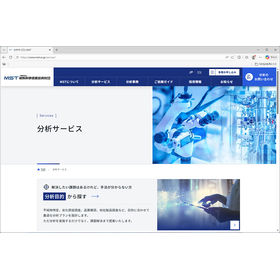
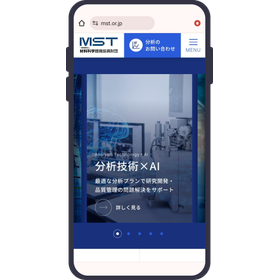
Notice of Website Renewal

To a more user-friendly and easier-to-read homepage.

We have completely renewed our homepage. In this renewal, we have revamped the design and structure to make it more user-friendly and comfortable for everyone, while enhancing the information provided. ◆ Key Points of the Renewal - Improved accessibility to information We have reviewed the common navigation across all pages and improved the menu structure to make it easier to understand. The structure allows for intuitive access to the necessary information. - Comfortable viewing in all environments In addition to PCs, we have made the site compatible with various viewing environments, including smartphones and tablets. You can enjoy a comfortable experience regardless of location or device. - Enhanced visual design for better visibility We have reviewed the overall color scheme and layout of the site, refreshing it to a more understandable and sophisticated design. ▼ You can view it here https://www.mst.or.jp/ We would be grateful if you could take a look. We will continue to strive for further enhancement of our content, and we appreciate your continued support.

  • SP_001.png
  • Contract measurement
  • Contract Inspection
  • Material Evaluation Test
  • Elemental Analysis Equipment

Added to bookmarks

Bookmarks list

Bookmark has been removed

Bookmarks list

You can't add any more bookmarks

By registering as a member, you can increase the number of bookmarks you can save and organize them with labels.

Free membership registration

FlashSmart Elemental Analyzer

Supports various applications with a single unit! Advanced elemental analysis that can be expanded to meet your needs.

The "FlashSmart Elemental Analyzer" is a solution that can be expanded to over 20 configurations within a single system, flexibly accommodating the growing CHNS/O analysis needs. Additionally, detailed reports are automatically generated by high-performance software, making all tasks easier. 【Features】 ■ High reliability ■ Simplicity ■ Modularity ■ Automation features ■ Uncompromising precision and accuracy ■ Robustness *For more details, please refer to the PDF document or feel free to contact us.

  • Analytical Equipment and Devices
  • Elemental Analysis Equipment

Added to bookmarks

Bookmarks list

Bookmark has been removed

Bookmarks list

You can't add any more bookmarks

By registering as a member, you can increase the number of bookmarks you can save and organize them with labels.

Free membership registration

[Analysis Case] Comprehensive Evaluation of Lighting Emitting Devices

We will conduct analysis of various materials, including the disassembly of LEDs, phosphors, and LED chips.

We will disassemble commercially available LED lighting, conduct composition analysis of each material, identify defects, perform physical analysis, and analyze impurities for energy-saving key devices.

  • Contract Analysis
  • Elemental Analysis Equipment

Added to bookmarks

Bookmarks list

Bookmark has been removed

Bookmarks list

You can't add any more bookmarks

By registering as a member, you can increase the number of bookmarks you can save and organize them with labels.

Free membership registration